




Project Overview
The City of Yellowknife is moving ahead with the Raw Water Supply Upgrade Project to ensure safe, reliable drinking water for decades to come. The project will modernize and expand the City’s raw water system and support a safe, reliable, and resilient drinking water supply.
Get Involved - Open House
Date: April 16, 2026 (Thursday)
Time: 6:00 pm to 8:00 pm
Location: Explorer Hotel, Katimavik A Room
If you missed the public open house, here’s the presentation.
Approximately 50 participants attended the Open House. The What We Heard Report highlights topics raised by participants.
Key themes heard included:
- The importance of clean drinking water
- drawing water from both the Yellowknife River and the Bay
- using Yellowknife Bay as a water source
- funding for infrastructure planning
- environmental protections
- construction impacts
- emergency preparedness; and
- the need for timely, transparent and ongoing engagement
About the Raw Water Supply Upgrade Project
The City is growing, and so are its water demands.
The Project includes improvements to the City’s existing pumphouses, new water intake pipes at Pumphouse No. 1, and updates to key components of the City’s water system. After reviewing water use and our municipal growth, we also established that more water is needed each year; to meet this need, the City is also requesting to increase the annual allocation of water from 4,000,000 cubic metres to 8,000,000 cubic metres of raw water. This helps to ensure the City can meet current demand while planning for future growth.
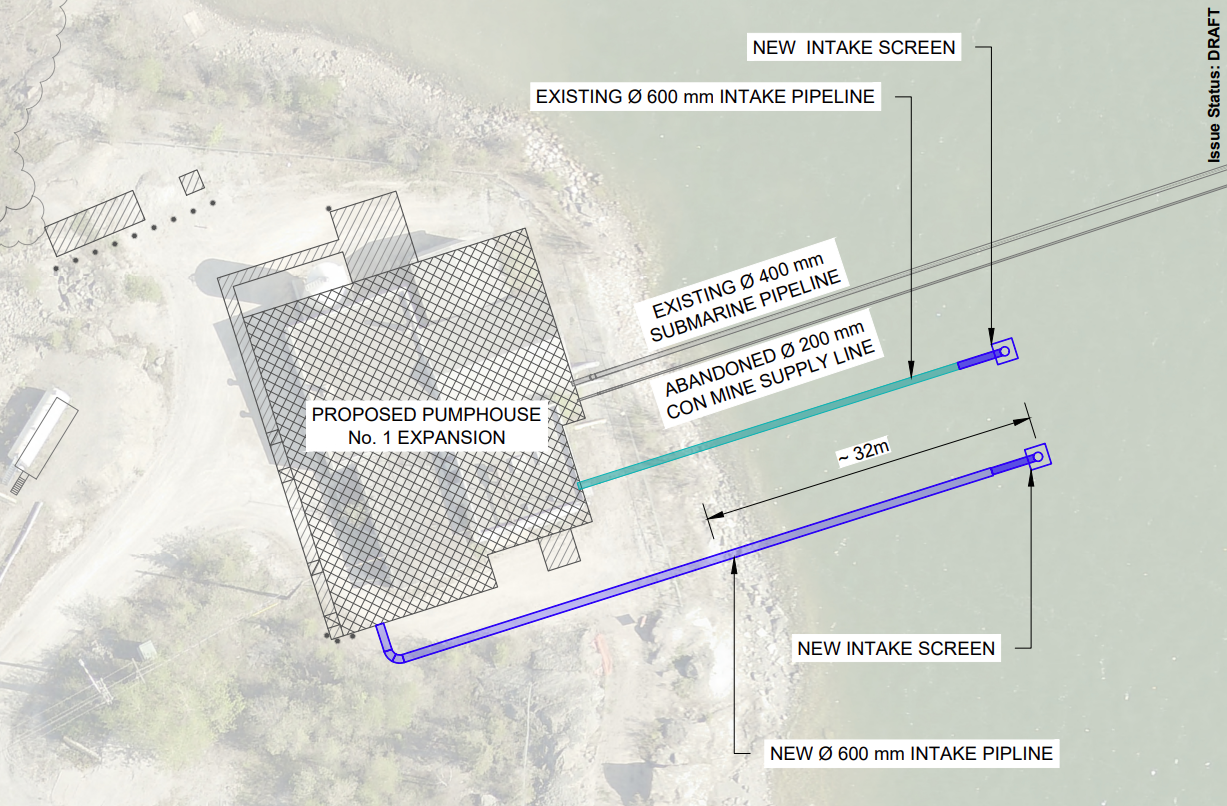 Pumphouse Number 1: Existing and Proposed Water Intakes
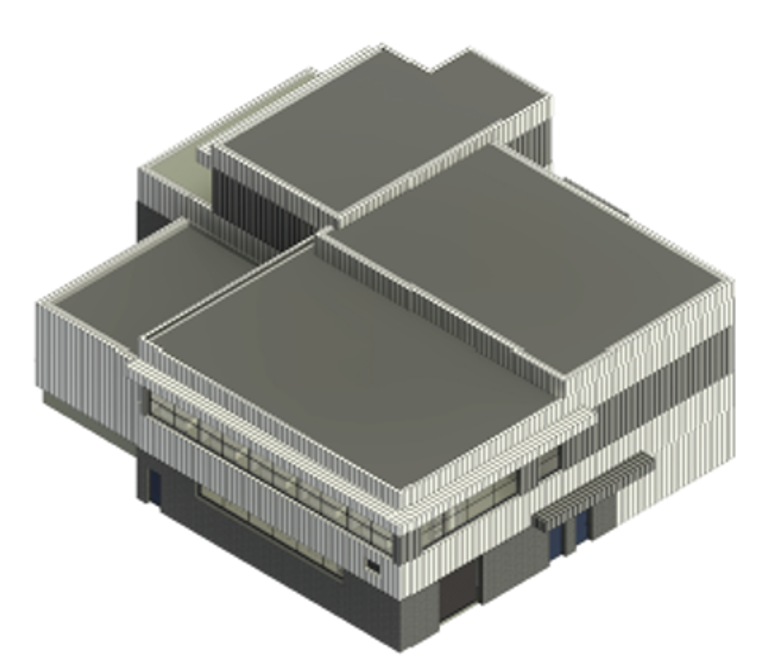 Pumphouse Number 1 Upgrades: Conceptual Rendering
To complete the project, the City must submit regulatory permits, including a Type A Water Licence Amendment and Type A Land Use Permit to the Mackenzie Land and Water Board (MVLWB).
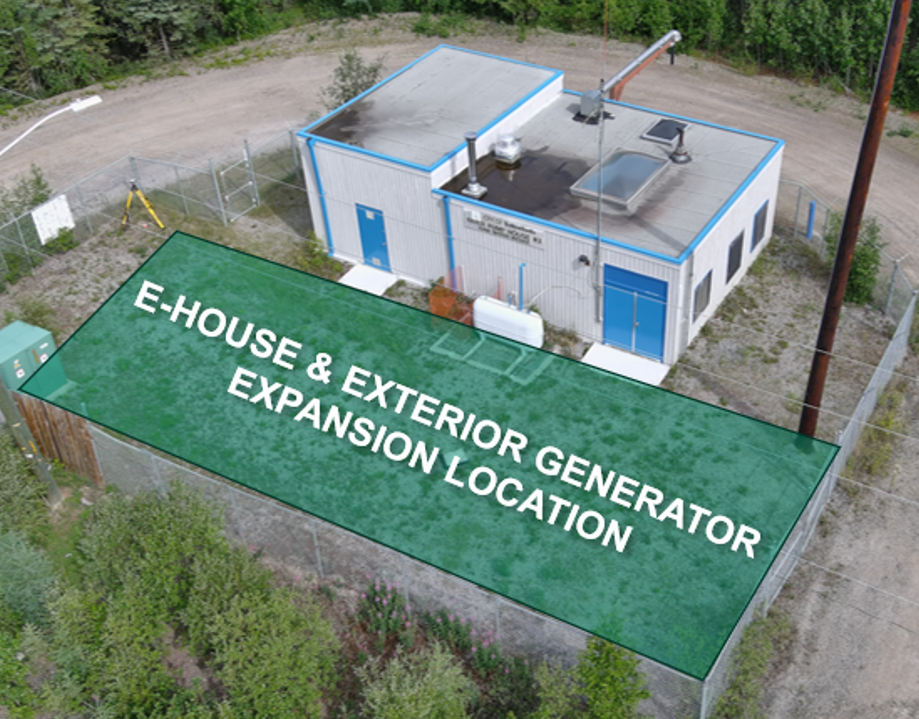 Pumphouse Number 2 Upgrades: Proposed E-house & Exterior Generator Expansion Location
How We Are Engaging You
This engagement aligns with the IAP2 “Consult” level:
- We’re asking for your input on concerns and to hear your questions
- Your feedback will help inform project considerations, such as safety and community concerns
- Final designs will also consider accessibility, budget, and site limitations
Engagement findings will be reflected in a “What We Heard” report, which City staff will consider as project design progresses.
Timelines
The City will be engaging residents and interested parties throughout the project schedule.
| Stage | Expected Period |
|---|---|
| MVLWB Regulatory Engagement | Feb 2026 – April 2026 |
| Land Use Permit and Water Licence Amendment Application | Spring 2026 |
| MVLWB Application Review | May 2026 – March 2027 |
| Submarine Pipeline Condition Assessment | Summer 2026 |
Frequently Asked Questions
| Where does our water come from today? | |
|
Since 1969, the City’s primary water source is the Yellowknife River. The City draws its municipal drinking water from the Yellowknife River. Water is transported by an underwater line to the City’s Water Treatment Plant (WTP) on the shore of Yellowknife Bay. Water is treated and tested before making its way to residents of Yellowknife, Ndilo and Dettah via underground water mains, water trucks, or summer aboveground water lines. The water treatment process uses a series of membranes that trap particles and contaminants as the water moves through them. After this filtration, the water is chlorinated to neutralize remaining impurities, and fluoride is added. The City’s current municipal water licence allows for use of up to 4,000,000 cubic metres of raw water annually, equivalent to an average raw water use of 10.96 ML/day (127 L/s). |
|
| Why does the City want to increase the amount of water needed annually? | |
|
The City is growing and so are its water demands. We reviewed water use, population growth and projected municipal growth, and established that more water is required annually. The City is requesting an amendment to withdraw up to 8,000,000 cubic metres of raw water annually; this will ensure the City can meet current demand while planning for future growth. While the City may not use this 8 million m³ allocation every year, securing this allocation ensures sufficient capacity to manage future growth without constraining development or service levels. |
|
| What will the project entail? | |
|
The City of Yellowknife is moving ahead with the Raw Water Supply Upgrade Project to ensure safe, reliable drinking water source for decades to come. The project includes improvements to the City’s existing pumphouses, new lake intake infrastructure, and updates to key components of the City’s water system. |
|
|
What permits and approvals does the City need for the upgrade? |
|
|
The City is required to complete seven regulatory permits or approvals to complete the upgrade. These applications ensure that the project meets all environmental, safety, and land‑use requirements. The applications are beginning in 2026, and final construction will be completed in 2030. Below is a brief overview of each permit or approval required: MVLWB Water Licence Amendment Application
MVLWB Type A Land Use Permit
Preliminary Environmental Screening
Fisheries and Oceans Canada
Transportation Canada
GNWT Lands – Land Tenure
Additional Permits Other permits, such as development permits and explosive permits (for limited blasting at Pumphouse No. 1), will be secured to support the safe construction of the project. Water quality will be monitored and reviewed through construction activities. |
|
|
Where will our drinking water come from? |
|
|
The City will continue to draw drinking water from the mouth of the Yellowknife River. When needed, the City will also draw water from Yellowknife Bay. This dual‑source approach will increase reliability, improve system resilience and capacity, and ensure safe drinking water for the community into the future. |
|
|
Will water from Yellowknife Bay be used? |
|
|
Yes. The City is seeking permission to draw water from either the Bay or the River. This ensures a safe, reliable drinking water is always available to residents. Currently water from Yellowknife Bay is used for maintenance and emergencies. Maintenance includes regular start-up and inspection of the intake pump at Pumphouse No.1. Emergency scenarios include things like a leak in the existing pipeline that would force it to be shut down for repairs, or a major fire that would need a large volume of water to put out. |
|
|
Is the water from Yellowknife Bay safe to drink? |
|
|
|
|
What is the status of the Giant Mine contamination area? |
|
|
The risk of contamination from Giant Mine continues to decline. A new water treatment plant at the site is nearing completion and the surface storage of major contaminated water at Giant Mine is scheduled for decommissioning by 2030. This ongoing remediation work continues to improve confidence in the long-term safety of Bay water. |
|
|
What changes will be made to the Pumphouses? |
|
|
Pumphouse No. 1 will undergo extensive upgrades. It will require a complete replacement of the structure (the existing building includes portions from 1948), new pumps and raw water piping, new heating, ventilation, and cooling systems and new generator. It will also include a new second‑floor office space, site grading and parking upgrades and installation of a second water intake for redundancy. Upgrades to Pumphouse No. 2 are less extensive. They will include new pumps (existing pumps are near end of life), improved ventilation, heating, and cooling, a new backup generator, an electrical system upgrade within an external “E-House”, and minor site layout changes with minor building improvements, but no l building expansion or in-river work. |
|
|
What will happen to the old pipeline? |
|
| The current pipeline from Pumphouse No.2 to Pumphouse No.1 is proposed to be left in place and remain in operation as part of the proposed raw water upgrades. The pipeline will continue to supply Yellowknife River water to Pumphouse No. 1. | |
|
Will work at Pumphouse 1 disturb the sediment in Yellowknife Bay? |
|
|
Limited construction activity along the shore of the Bay may create localized, short-term disturbance to lakebed sediment. This will be short term, and not impact drinking water quality. Construction mitigation methods will be used to limit sediment disruption. Ongoing sediment sampling and water quality monitoring will be conducted during construction. |
|
|
How will the project affect traditional hunting, fishing, gathering or other traditional activities? |
|
|
The City does not anticipate disturbance to traditional hunting, fishing, gathering or other activities. Throughout the project, we will engage rights holders to share news about the project, gather feedback about potential impacts, and updates on how input was considered. Yellowknife Bay (Wıìlıìcheh) is a sacred harvesting area for the Yellowknives Dene First Nation, critical for traditional land use, gathering, and spiritual practices. For centuries, the YKDFN have used the Bay to travel and access other areas.* The mouth of the Yellowknife River (Wıìlıìdeh), has long been a dwelling place and where Treaty was often taken, and continues today to be an active cultural gathering site. Throughout the project planning and construction, the City will work closely with the YKDFN to identify and minimize disturbance to sacred areas and places of historical significance, as the route is planned and construction begun. *Trailmark & DownNorth (October 2020). Summary of Research on the Establishment, Administration and Oversight of the Giant Mine and its Impacts on the Yellowknives Dene First Nation. |
|
|
Who is paying for the raw water upgrades? |
|
|
On March 13, 2019, the Government of Canada announced that Yellowknife was a successful applicant to the Disaster Mitigation and Adaptation Fund (DMAF) program and would receive funding of $25,862,218, which represented 75% of the estimated total project costs at the time. The City received a letter from the Minister of Infrastructure and Communities stating approval-in-principle for the project. The current cost estimate for the project is approximately $37,000,000. |
You may reach out to the project team at waterlicence@yellowknife.ca for comments, questions and concerns at any time during the project.